Energy performance contract at the Pestana Viking
All the hot water made with heat recovered from the chiller, and the boilers idle in summer: Âmago’s energy performance contract at the Pestana Viking.
In service since February 2017
The energy performance contract that Âmago won in a national competition run by the Innovation Support Fund and ADENE went into service in February 2017.
After a first period of testing, fine-tuning and improvements, we achieved a major goal: producing all of the hotel’s domestic hot water with nothing but heat recovered from the chiller and a small auxiliary heat pump.
The backup boiler has not run for several weeks this summer. This is what energy efficiency really means: heat that is normally wasted is being used to produce domestic hot water practically for free.
The project
The energy performance contract that Âmago implemented at the Pestana Viking Hotel, on Senhora da Rocha beach (Alporchinhos, Lagoa), was financed by the FAI — the Innovation Support Fund.
The Viking Hotel offered particularly good conditions for cutting energy costs. It is a 1970s building, refurbished over the years, but it had kept most of its original air conditioning systems.
Its construction and systems make it very special. It is built entirely as a tunnel structure, in other words wholly in concrete: there are no bricks, only concrete and glass, which makes it thermally inefficient and very dependent on active air conditioning to keep guests comfortable.
Cooling came from an original cooling-only water-to-water chiller with a cooling tower. Two diesel boilers produced all the space heating in winter and all the domestic hot water (DHW) all year round — and heating oil costs almost as much as road diesel, which makes it an expensive fuel.
Âmago designed and proposed the energy performance contract on the basis of Notice 01/2013 of the Innovation Support Fund.
An in-depth energy audit was carried out as part of the energy certificate required for the application, along with a detailed thermal simulation of the building. The response of the future air conditioning equipment was studied in detail, calculating the EER (Energy Efficiency Ratio) and COP (Coefficient of Performance) of several reversible chillers for every hour of the year, taking into account the thermal load needed in each hour and the average outdoor temperature for that hour. This study allowed us to calculate a kind of SEER (seasonal EER) and SCOP (seasonal COP) specific to this building for each chiller analysed.
The building used around 2,500 MWh a year, of which HVAC (heating, ventilation and air conditioning), including DHW, accounted for about 42% and lighting for about 26%.
Analysing the schematic and the existing installation revealed an old and obsolete system compared with new technologies and new ways of connecting equipment. Understanding how the installation worked — listening to the maintenance team about how they operated it, and to the problems and complaints of the kitchen, restaurant, reception, rooms and pools — was essential to understand the current state and plan for the future.
The improvement measures
With an almost blank canvas, our engineers were given free rein to create the most efficient building possible from this rough diamond. Many options were simulated, some well outside the usual for HVAC systems — here we had to think “outside the box” — before we arrived at the main improvement measures:
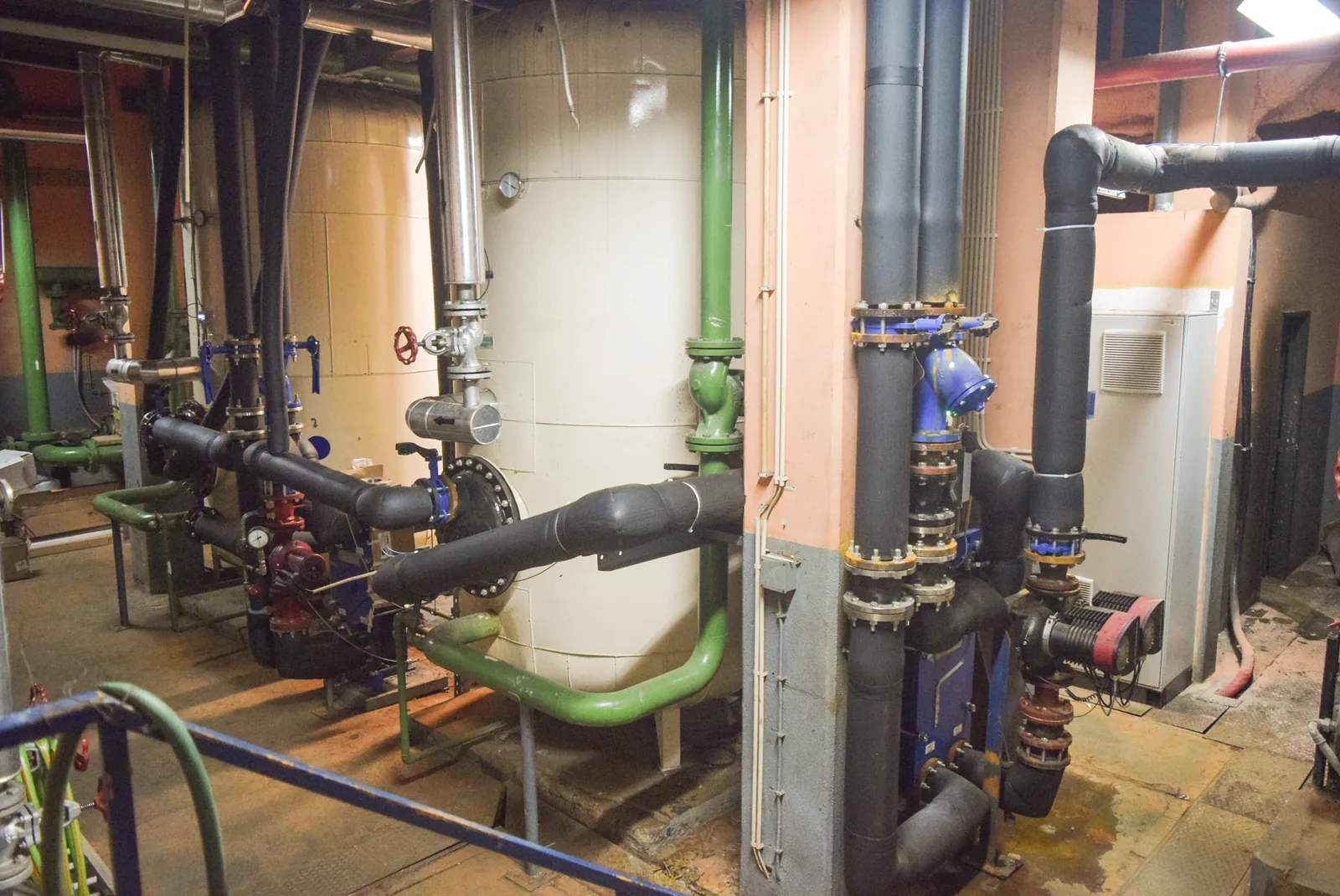
- The big revolution: changing the schematic of the whole central system. There is now a chiller with variable speed on the primary circuit, partial high-temperature heat recovery, heat production in counterflow with DHW consumption, and an auxiliary heat pump.
- A reversible chiller that produces all the cooling, all the heating and most of the domestic hot water. We chose the one with the best EER and COP values in Eurovent and in our study, and that could reach the heat recovery values we wanted: the BLUEBOX TETRIS HP 2 A 34.4.
- A 15 kW thermal heat pump to recover heat from the refrigeration condensers.
- An ITELMATIS building management system (BMS), designed in partnership with Âmago — the only way to run the whole installation automatically and get the best results — controlling the whole plant room and the air handling units.
- A review of all the energy-consuming equipment connected to the HVAC, the pools and the kitchen, in terms of control and daily operation, to improve energy-wasting habits, with recommissioning in some cases.
- Dynamic constant-flow balancing valves for the air handling units and the room fan coils, combined with variable-speed circulation pumps.
- Thermal insulation of the whole domestic hot water distribution network and of the plant room.
- A chlorine dioxide disinfection system for the hot water, to avoid frequent thermal shocks and allow the DHW distribution temperature to be lowered.
- Reducing the contracted power and the peak-hour power, with an appreciable drop in these parasitic costs.
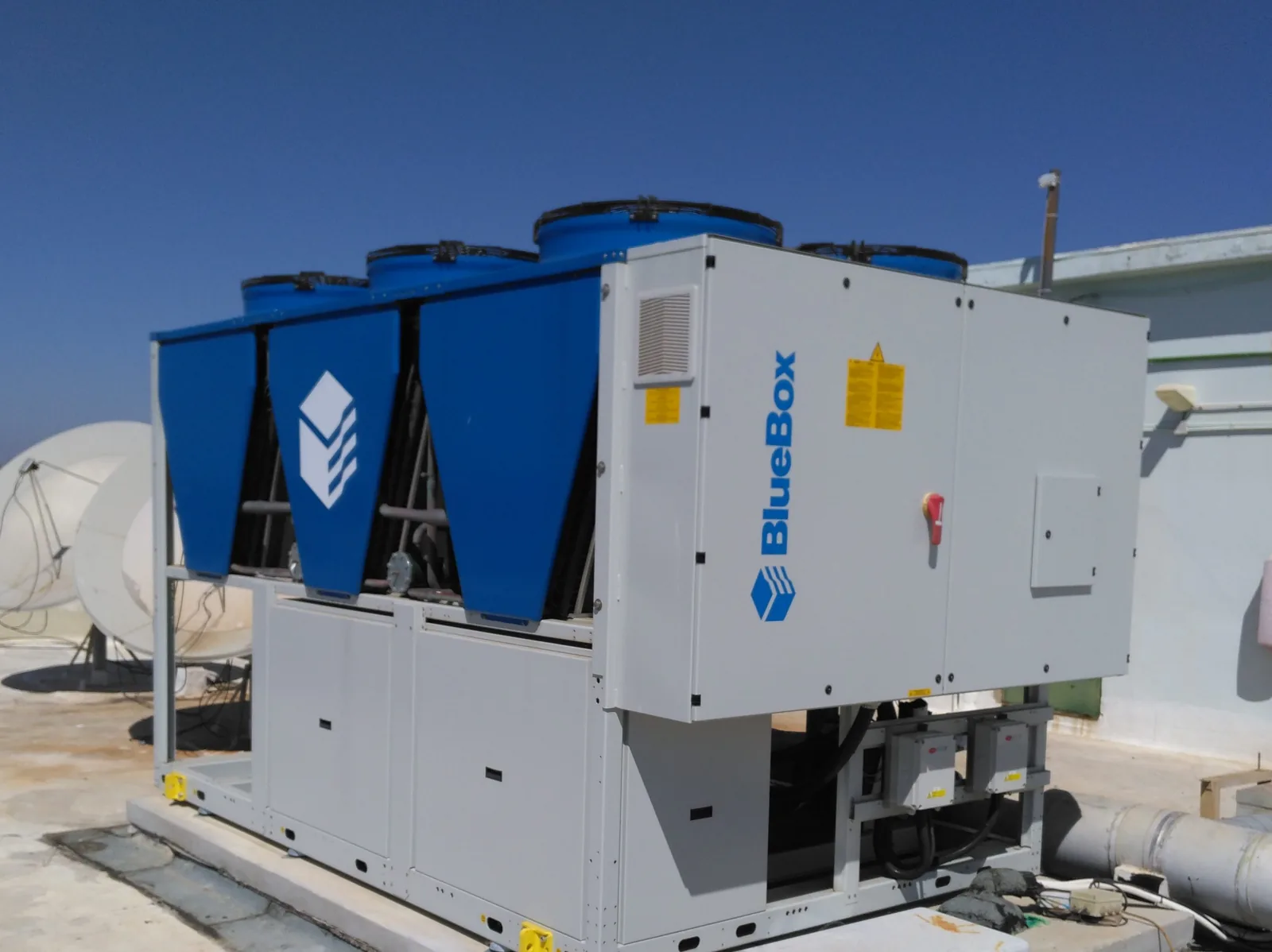
The BlueBox chiller.
In July and August 2016, while still in the testing and fine-tuning phase, this investment delivered savings against the baseline of more than 200,000 kWh a month — 68% on diesel and 41% on electricity — making the project extremely attractive and a model for the Pestana Group and for Âmago.
Keeping costs down
Cutting costs through investment is easy compared with keeping them low and bringing them down further over time.
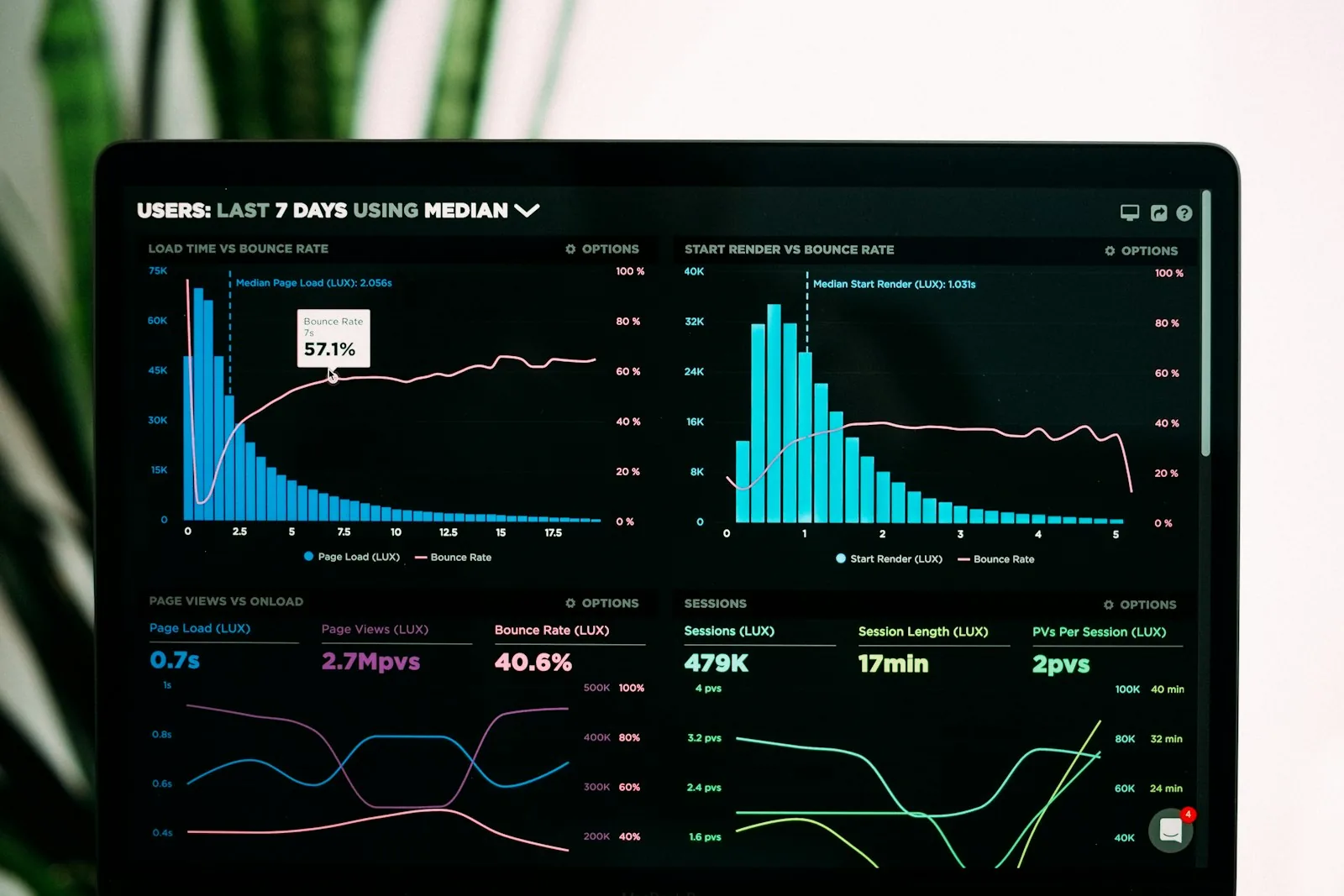
That means learning to run the central plant and staying focused on the goal: reducing costs and dependence on oil. Âmago does this with an engineer constantly analysing how the installation behaves, the weather and the forecast — to choose the best options for the next day — and energy consumption, together with the data sent by the BMS and automatic alerts and alarms that detect anomalies and inefficiencies early.
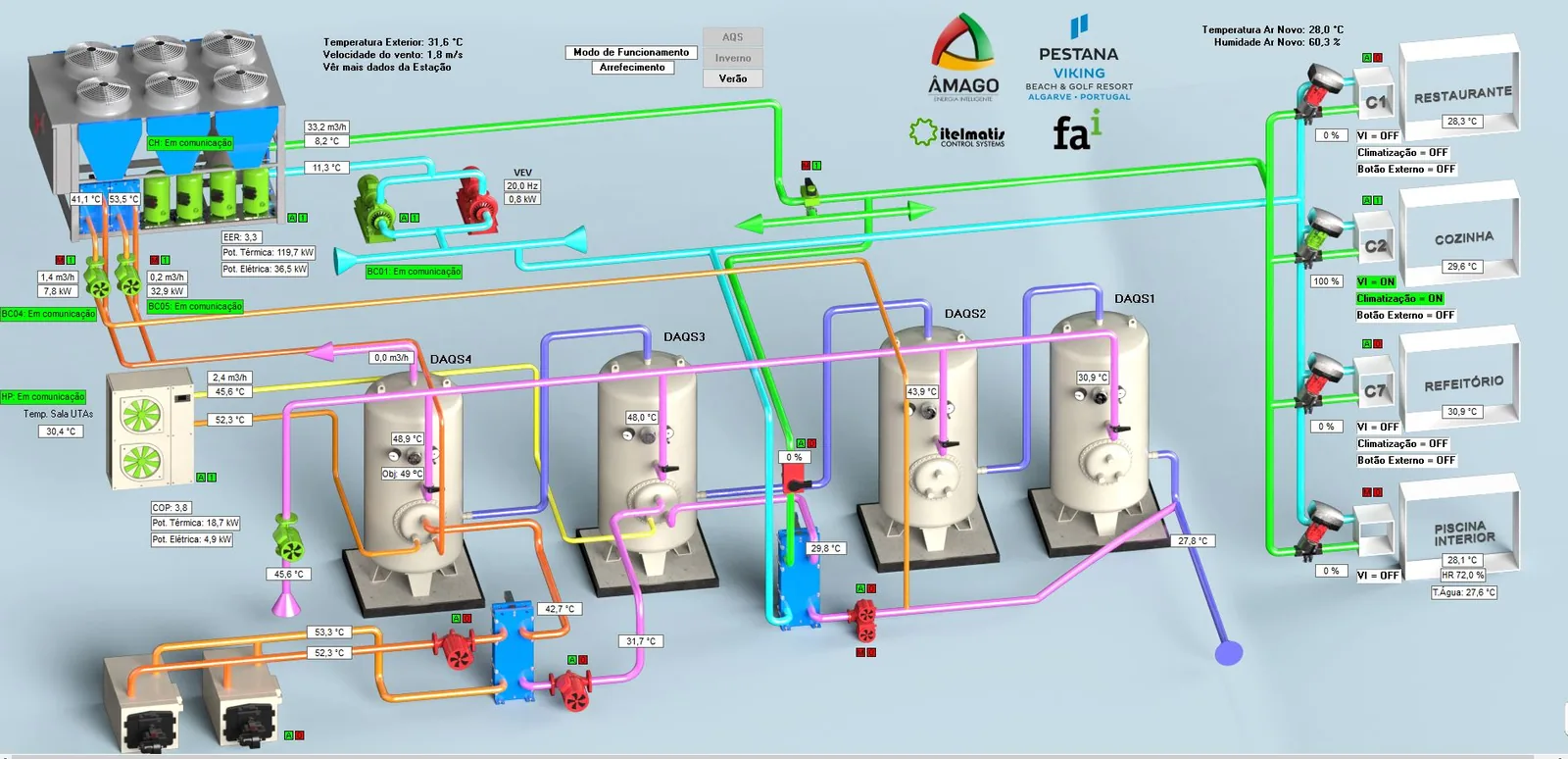
The building management system in place.
It is the combination of the automatic BMS and integrated energy management systems with the experience of our engineers — attentive both to micro solutions, at the level of a single piece of equipment or its control, and to macro solutions, at the level of the whole building — that delivers the best results and lets us keep diagnosing and implementing improvements throughout the life of the contract, making it an active part of the Pestana Group’s sustainability programme.
The financing
Winning the FAI competition was very important: it meant 70% of the investment was financed, with the rest covered by our own capital. It is an interest-free loan, with a year’s grace and three years to repay.
This kind of financing greatly reduces costs and solves what is usually the biggest obstacle to energy performance contracts: financing. We hope this success story can be an example for future European and Portuguese guarantee schemes. By reducing the risk perceived by lenders, the cost of money falls, investments become cheaper and we all win — starting with Portugal, which cuts its imports of fossil fuels.
Âmago remains committed to reducing energy costs in buildings and industry, and is promoting more energy performance contracts: they are the safest way for clients to cut their energy and water costs.
The project was featured in Edifícios e Energia magazine, issue 107, September/October 2016.